TRUMP ENERGY CZAR PROMISES PRICE DROP
Trump energy czar, Interior Secretary Doug Burgum is confident U.S. energy will continue its record comeback despite the ongoing conflict in Iran.
EXCLUSIVE: Despite the ongoing conflict in Iran, President Donald Trump’s “energy czar,” Doug Burgum, is confident the “temporary blip up” in gas and energy prices facing Americans will come back down very soon as the president’s “drill baby drill” agenda takes effect.
In an interview with Fox News Digital, Burgum, who leads the Interior Department and chair of Trump’s National Energy Dominance Council, said: “It’s all about supply.”
“You want prices to go down? Supply has got to go up,” he said. To this end, he said his agency approved a record 6,000-plus drilling permits on U.S. soil, reversing the Biden administration’s trend of increased regulation that he said had stunted the country’s energy independence.
Subscribe


This Day in History
-
Russian Submarine K-141 Kursk Sinks in Barents Sea (2000)August 12, 2026
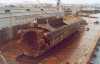 While completing naval exercises with dummy torpedoes on August 12, 2000, the Russian submarine Kursk suffered two explosions two minutes and 15 seconds apart. The second explosion registered about a 3.5 on the Richter scale. The blasts destroyed the front hull, and all 118 crew members died. It was initially believed that the entire crew died quickly. However, what evidence later suggested that some survived in another area of the submarine for about four hours after the explosions?
 While completing naval exercises with dummy torpedoes on August 12, 2000, the Russian submarine Kursk suffered two explosions two minutes and 15 seconds apart. The second explosion registered about a 3.5 on the Richter scale. The blasts destroyed the front hull, and all 118 crew members died. It was initially believed that the entire crew died quickly. However, what evidence later suggested that some survived in another area of the submarine for about four hours after the explosions?
Today’s Birthday
-
James Buchanan "Diamond Jim" Brady (1856)August 12, 2026
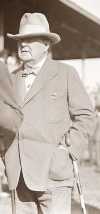 Financier and philanthropist "Diamond Jim" Brady exemplified the American Dream. He started out as a bellboy and messenger before getting a job with the New York Central Railroad and then working his way up through the industry, eventually amassing a fortune selling railroad supplies. With his newfound wealth, he indulged in his two greatest weaknesses: food—one restaurant owner reportedly called him "the best 25 customers I ever had"—and jewels. What was supposedly a typical meal for Brady?
 Financier and philanthropist "Diamond Jim" Brady exemplified the American Dream. He started out as a bellboy and messenger before getting a job with the New York Central Railroad and then working his way up through the industry, eventually amassing a fortune selling railroad supplies. With his newfound wealth, he indulged in his two greatest weaknesses: food—one restaurant owner reportedly called him "the best 25 customers I ever had"—and jewels. What was supposedly a typical meal for Brady?
Today’s Holiday
-
Queen's Birthday (Thailand)August 12, 2026
 The Queen's Birthday is a nationwide celebration in Thailand of the birthday of Her Majesty Queen Sirikit (b. 1932). Throughout the country, buildings are decorated to honor the queen, but the most splendid are in Bangkok, where buildings and streets are brilliant with colored lights.
 The Queen's Birthday is a nationwide celebration in
 Article of the Day
-
Lake MalawiAugust 12, 2026
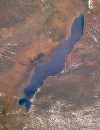 The third largest lake in Africa and ninth largest in the world, Lake Malawi is bounded on the west and south by Malawi, on the east by Mozambique, and on the north by Tanzania. Also known as Lake Nyasa—so named by Scottish missionary David Livingstone in 1859—it is approximately 360 miles (580 km) long with an average width of 25 miles (40 km). Fed by 14 rivers, it is home to more than 200 recorded species of fish—making it one of the most species-diverse lakes in the world. How deep is it?
 The third largest lake in Africa and ninth largest in the world, Lake Malawi is bounded on the west and south by Malawi, on the east by Mozambique, and on the north by Tanzania. Also known as Lake Nyasa—so named by Scottish missionary David Livingstone in 1859—it is approximately 360 miles (580 km) long with an average width of 25 miles (40 km). Fed by 14 rivers, it is home to more than 200 recorded species of fish—making it one of the most species-diverse lakes in the world. How deep is it?
Leave a Reply
You must be logged in to post a comment.