PRIVACY POLICY
Who we are
Our website address is: https://sacredcombat.com.
What personal data we collect and why we collect it
Comments
When visitors leave comments on the site we collect the data shown in the comments form, and also the visitor’s IP address and browser user agent string to help spam detection.
An anonymized string created from your email address (also called a hash) may be provided to the Gravatar service to see if you are using it. The Gravatar service privacy policy is available here: https://automattic.com/privacy/. After approval of your comment, your profile picture is visible to the public in the context of your comment.
Media
If you upload images to the website, you should avoid uploading images with embedded location data (EXIF GPS) included. Visitors to the website can download and extract any location data from images on the website.
Contact forms
Cookies
If you leave a comment on our site you may opt-in to saving your name, email address and website in cookies. These are for your convenience so that you do not have to fill in your details again when you leave another comment. These cookies will last for one year.
If you visit our login page, we will set a temporary cookie to determine if your browser accepts cookies. This cookie contains no personal data and is discarded when you close your browser.
When you log in, we will also set up several cookies to save your login information and your screen display choices. Login cookies last for two days, and screen options cookies last for a year. If you select “Remember Me”, your login will persist for two weeks. If you log out of your account, the login cookies will be removed.
If you edit or publish an article, an additional cookie will be saved in your browser. This cookie includes no personal data and simply indicates the post ID of the article you just edited. It expires after 1 day.
Embedded content from other websites
Articles on this site may include embedded content (e.g. videos, images, articles, etc.). Embedded content from other websites behaves in the exact same way as if the visitor has visited the other website.
These websites may collect data about you, use cookies, embed additional third-party tracking, and monitor your interaction with that embedded content, including tracking your interaction with the embedded content if you have an account and are logged in to that website.
Analytics
Who we share your data with
How long we retain your data
If you leave a comment, the comment and its metadata are retained indefinitely. This is so we can recognize and approve any follow-up comments automatically instead of holding them in a moderation queue.
For users that register on our website (if any), we also store the personal information they provide in their user profile. All users can see, edit, or delete their personal information at any time (except they cannot change their username). Website administrators can also see and edit that information.
What rights you have over your data
If you have an account on this site, or have left comments, you can request to receive an exported file of the personal data we hold about you, including any data you have provided to us. You can also request that we erase any personal data we hold about you. This does not include any data we are obliged to keep for administrative, legal, or security purposes.
Where we send your data
Visitor comments may be checked through an automated spam detection service.
Your contact information
Additional information
How we protect your data
What data breach procedures we have in place
What third parties we receive data from
What automated decision making and/or profiling we do with user data
Industry regulatory disclosure requirements
Subscribe


This Day in History
-
Russian Submarine K-141 Kursk Sinks in Barents Sea (2000)August 12, 2026
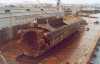 While completing naval exercises with dummy torpedoes on August 12, 2000, the Russian submarine Kursk suffered two explosions two minutes and 15 seconds apart. The second explosion registered about a 3.5 on the Richter scale. The blasts destroyed the front hull, and all 118 crew members died. It was initially believed that the entire crew died quickly. However, what evidence later suggested that some survived in another area of the submarine for about four hours after the explosions?
 While completing naval exercises with dummy torpedoes on August 12, 2000, the Russian submarine Kursk suffered two explosions two minutes and 15 seconds apart. The second explosion registered about a 3.5 on the Richter scale. The blasts destroyed the front hull, and all 118 crew members died. It was initially believed that the entire crew died quickly. However, what evidence later suggested that some survived in another area of the submarine for about four hours after the explosions?
Today’s Birthday
-
James Buchanan "Diamond Jim" Brady (1856)August 12, 2026
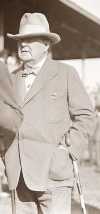 Financier and philanthropist "Diamond Jim" Brady exemplified the American Dream. He started out as a bellboy and messenger before getting a job with the New York Central Railroad and then working his way up through the industry, eventually amassing a fortune selling railroad supplies. With his newfound wealth, he indulged in his two greatest weaknesses: food—one restaurant owner reportedly called him "the best 25 customers I ever had"—and jewels. What was supposedly a typical meal for Brady?
 Financier and philanthropist "Diamond Jim" Brady exemplified the American Dream. He started out as a bellboy and messenger before getting a job with the New York Central Railroad and then working his way up through the industry, eventually amassing a fortune selling railroad supplies. With his newfound wealth, he indulged in his two greatest weaknesses: food—one restaurant owner reportedly called him "the best 25 customers I ever had"—and jewels. What was supposedly a typical meal for Brady?
Today’s Holiday
-
Queen's Birthday (Thailand)August 12, 2026
 The Queen's Birthday is a nationwide celebration in Thailand of the birthday of Her Majesty Queen Sirikit (b. 1932). Throughout the country, buildings are decorated to honor the queen, but the most splendid are in Bangkok, where buildings and streets are brilliant with colored lights.
 The Queen's Birthday is a nationwide celebration in
 Article of the Day
-
Lake MalawiAugust 12, 2026
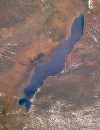 The third largest lake in Africa and ninth largest in the world, Lake Malawi is bounded on the west and south by Malawi, on the east by Mozambique, and on the north by Tanzania. Also known as Lake Nyasa—so named by Scottish missionary David Livingstone in 1859—it is approximately 360 miles (580 km) long with an average width of 25 miles (40 km). Fed by 14 rivers, it is home to more than 200 recorded species of fish—making it one of the most species-diverse lakes in the world. How deep is it?
 The third largest lake in Africa and ninth largest in the world, Lake Malawi is bounded on the west and south by Malawi, on the east by Mozambique, and on the north by Tanzania. Also known as Lake Nyasa—so named by Scottish missionary David Livingstone in 1859—it is approximately 360 miles (580 km) long with an average width of 25 miles (40 km). Fed by 14 rivers, it is home to more than 200 recorded species of fish—making it one of the most species-diverse lakes in the world. How deep is it?