STATE DEPT DEMANDS AMERICANS EVACUATE 14 COUNTRIES
Within the opening days of the Iran-US-Israel war, the State Department urged Americans across 14 countries in the Middle East region to urgently depart. There’s since been an ongoing US government facilitated evacuation effort. Private tour groups have also been coordinating to get people out.
As the Iran-US-Israel war ignites tensions across the Middle East, the State Department has urgently urged Americans in 14 countries to evacuate, with ongoing government and private efforts aiding escape; tourists in Israel are fleeing through Egypt to catch safe flights, while Turkey—a traditionally stable and popular destination—is now partially on the warning list due to escalating risks of terrorism, armed conflict, and detentions. Although the advisory only covers southeast Turkey, the U.S. has ordered non-essential consulate staff out of Adana near the key NATO Incirlik air base, highlighting the growing strategic sensitivity as bombings continue and American troops remain stationed at several Turkish bases.
Subscribe


This Day in History
-
Edgardo Mortara Kidnapped from Jewish Family after Secret Baptism (1858)June 23, 2026
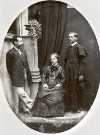 Mortara, the son of a Jewish couple living in the Papal States, was secretly baptized Catholic as an infant by a panicked servant during an infantile illness. The baptism was deemed valid by the Catholic Church and, because canon law forbade non-Christians from raising Christian children, Pope Pius IX ordered the six-year-old Mortara to be taken to Rome as his ward. Several countries objected to the pope's decision and called for the boy to be returned to his parents. What became of Mortara?
 Mortara, the son of a Jewish couple living in the Papal States, was secretly baptized Catholic as an infant by a panicked servant during an infantile illness. The baptism was deemed valid by the Catholic Church and, because canon law forbade non-Christians from raising Christian children, Pope Pius IX ordered the six-year-old Mortara to be taken to Rome as his ward. Several countries objected to the pope's decision and called for the boy to be returned to his parents. What became of Mortara?
Today’s Birthday
-
Erich Maria Remarque (1898)June 22, 2026
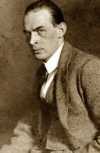 Drafted into the German army at age 18, Remarque served in World War I and was wounded several times. From his experience of trench warfare, he drew a grimly realistic picture of the horror of battle in his first novel and masterpiece, All Quiet on the Western Front. It was an immediate international success, and Remarque went on to write several other novels. All Quiet on the Western Front was later burned by the Nazis, who guillotined which of his family members in 1943?
 Drafted into the German army at age 18, Remarque served in World War I and was wounded several times. From his experience of trench warfare, he drew a grimly realistic picture of the horror of battle in his first novel and masterpiece, All Quiet on the Western Front. It was an immediate international success, and Remarque went on to write several other novels. All Quiet on the Western Front was later burned by the Nazis, who guillotined which of his family members in 1943?
Today’s Holiday
-
Stonehenge Summer Solstice CeremonyJune 23, 2026
 Stonehenge, the ancient stone circle located in Wiltshire, England, is believed to have been built between about 3050 and 1600 BCE. At the Summer Solstice, when viewed from the center of the monument, the sun rises through the entrance and just between two of the large stones. Today, modern Druids and other Neopagans gather at Stonehenge for Summer Solstice ceremonies. Wearing white robes and scarlet hoods, when the first rays of the rising sun shine on the Altar Stone, they walk in procession around the circle, gathering at the Altar Stone to recite prayers and salute the rising sun.
Article of the Day
-
The Bucket ArgumentJune 22, 2026
 In addition to establishing the foundations of classical mechanics and introducing his law of universal gravitation, Isaac Newton's 1687 text The Mathematical Principles of Natural Philosophy explored his rotating bucket argument, which has been studied by scientists for centuries. In it, he opposed the dominant view of motion—devised by Rene Descartes—that space is actually the extension of matter. How did Newton use a hypothetical bucket to try to make his point?
 In addition to establishing the foundations of classical mechanics and introducing his law of universal gravitation, Isaac Newton's 1687 text The Mathematical Principles of Natural Philosophy explored his rotating bucket argument, which has been studied by scientists for centuries. In it, he opposed the dominant view of motion—devised by Rene Descartes—that space is actually the extension of matter. How did Newton use a hypothetical bucket to try to make his point?
Leave a Reply
You must be logged in to post a comment.