300+ TSA QUITTERS, SECURITY GAP
More than 300 Transportation Security Administration (TSA) personnel have reportedly quit since the Department of Homeland Security’s partial shutdown, which began in February.
Since the Department of Homeland Security's partial shutdown began in mid-February, over 300 TSA workers have quit amid worsening conditions, with around 50,000 employees working without pay and absence rates soaring above 10% at key airports. Houston’s William P. Hobby Airport experienced a staggering 53% absence rate, causing flight delays over three hours, while major hubs like New Orleans, JFK, and Atlanta faced severe disruptions, forcing warnings of extensive wait times. The crisis deepens as political parties trade blame, leaving TSA operations strained and travelers frustrated.
📰 Via Oann
Subscribe


This Day in History
-
The Hammond Circus Train Wreck (1918)June 22, 2026
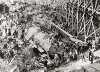 On the morning of June 22, 1918, a locomotive pulling empty passenger cars rear-ended the Hagenbeck-Wallace circus train near Hammond, Indiana. The wreck and subsequent fire—likely ignited by the oil lamps in the circus train's wooden sleeping cars—resulted in 86 deaths and 127 injuries. Most of the dead were buried five days later in a nearby cemetery, their graves marked with nicknames like "Baldy" and "Smiley" since many bodies could not be formally identified. What caused the collision?
 On the morning of June 22, 1918, a locomotive pulling empty passenger cars rear-ended the Hagenbeck-Wallace circus train near Hammond, Indiana. The wreck and subsequent fire—likely ignited by the oil lamps in the circus train's wooden sleeping cars—resulted in 86 deaths and 127 injuries. Most of the dead were buried five days later in a nearby cemetery, their graves marked with nicknames like "Baldy" and "Smiley" since many bodies could not be formally identified. What caused the collision?
Today’s Birthday
-
Erich Maria Remarque (1898)June 22, 2026
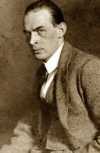 Drafted into the German army at age 18, Remarque served in World War I and was wounded several times. From his experience of trench warfare, he drew a grimly realistic picture of the horror of battle in his first novel and masterpiece, All Quiet on the Western Front. It was an immediate international success, and Remarque went on to write several other novels. All Quiet on the Western Front was later burned by the Nazis, who guillotined which of his family members in 1943?
 Drafted into the German army at age 18, Remarque served in World War I and was wounded several times. From his experience of trench warfare, he drew a grimly realistic picture of the horror of battle in his first novel and masterpiece, All Quiet on the Western Front. It was an immediate international success, and Remarque went on to write several other novels. All Quiet on the Western Front was later burned by the Nazis, who guillotined which of his family members in 1943?
Today’s Holiday
-
Croatia Anti-Fascist Resistance DayJune 22, 2026
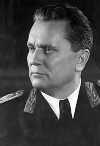 This holiday in Croatia, also called Anti-Fascism Day, dates back to the Second World War. After Nazi Germany invaded and conquered Yugoslavia in 1941, Croatia became a German puppet state under a government of Croatian fascists, called the Ustaše. One of the resistance groups that sprang up to oppose the fascist government was the Partisans, headed by half-Croatian Communist leader Josip Broz Tito. Anti-Fascist Resistance Day is a national holiday in Croatia. Like most warm-weather holidays in the country, it is celebrated with outdoor barbeques and fireworks.
 This holiday in
 Article of the Day
-
The Bucket ArgumentJune 22, 2026
 In addition to establishing the foundations of classical mechanics and introducing his law of universal gravitation, Isaac Newton's 1687 text The Mathematical Principles of Natural Philosophy explored his rotating bucket argument, which has been studied by scientists for centuries. In it, he opposed the dominant view of motion—devised by Rene Descartes—that space is actually the extension of matter. How did Newton use a hypothetical bucket to try to make his point?
 In addition to establishing the foundations of classical mechanics and introducing his law of universal gravitation, Isaac Newton's 1687 text The Mathematical Principles of Natural Philosophy explored his rotating bucket argument, which has been studied by scientists for centuries. In it, he opposed the dominant view of motion—devised by Rene Descartes—that space is actually the extension of matter. How did Newton use a hypothetical bucket to try to make his point?
Leave a Reply
You must be logged in to post a comment.